The full card, graded
The autopsy · FightIQ NewsroomOur UFC Abu Dhabi card: 10 of 12 winners, 5 of 12 methodsBoth flagged picks landed and both misses came from the bottom of our confidence range. The method column was the weak spot.

The breakdown
Bogdan Guskov is 4-1-1 through six UFC appearances and has finished all four men he has beaten, three by KO/TKO and one by submission, though his December meeting with Jan Blachowicz produced no winner on the majority scorecards. Magomed Ankalaev is 12-2-1, 1 NC across 16 UFC fights and spent his last two of them in title bouts, taking a five-round unanimous decision from Alex Pereira in March 2025 and losing the October rematch by KO/TKO in round one. The model has Ankalaev at 72.5% over five rounds, with the stoppage the most likely method.
The read is depth of octagon experience against a shorter, hotter run of finishes. Ankalaev's path is the one he took through Aleksandar Rakic and the first Pereira fight, controlling the exchanges and letting the rounds accumulate, and over 25 minutes he has been there before. Guskov's path is narrower and comes early, because every one of his UFC wins has ended inside two rounds and none of them needed a judge. The tell is that Ankalaev's only recent loss came in the first round, which is exactly where Guskov does his work.
- Ankalaev's five-round experience against Guskov's early finishing rate
- Ankalaev returning from a first-round stoppage loss
- Guskov's path is landing heavy inside the opening two rounds, where all his UFC wins have come
- Light heavyweight five-rounder, pacing matters more than on the rest of the card
- The model is confident here without being emphatic
The breakdown
Ramazan Temirov is 2-0 in the UFC with a first-round KO/TKO of CJ Vergara and a unanimous decision over Charles Johnson, a sample of two fights and nothing more. Steve Erceg is 5-3 through eight, a run that includes a five-round title-bout loss to Alexandre Pantoja, a first-round KO/TKO loss to Kai Kara-France and a five-round decision loss to Brandon Moreno, followed by decision wins over Ode Osbourne and Tim Elliott. The model splits it at 51.0% for Erceg, the tightest read on the card.
There is no separation here and the model is honest about it. Erceg's path is the one he has used twice since the losing run, taking rounds against a smaller body of work and making the fight long. Temirov's path is the Vergara fight, catching an opponent who has been stopped inside a round before and ending it there. The interesting part is that Erceg has been to five rounds twice and Temirov has never been past three, so the deciding factor may be what the second half of round three looks like.
- Erceg's championship-round mileage against Temirov's two-fight sample
- Erceg is two wins into rebuilding after three straight losses
- Temirov's path is landing something heavy early, the way he ended the Vergara fight
- Flyweight three-rounder, likeliest to be decided on the scorecards
- The tightest read on the card, and the model says so


The breakdown
Neither man has a UFC record in our data. Damian Rzepecki and Magomed Zaynukov both arrive with no prior octagon appearances, which means the model is working without a single UFC data point on either side. It leans to Zaynukov at 61.7% and expects the fight to end by KO/TKO.
Treat this one lightly, because a number built on no octagon history for either fighter deserves more scepticism than its size suggests. Zaynukov is the side the model prefers, and the finish is the method it expects if the read holds. Rzepecki's path is the one every debutant has, which is that nothing about a first walk to the cage is on record and the model has nothing to say otherwise. The honest tell is that 61.7% here and 61.7% elsewhere on the card are not the same number.
- Two debutants, no UFC form on either side of the matchup
- First-octagon nerves are the largest unmeasured factor in the bout
- Rzepecki's path is simply that the model has nothing on him to rule it out
- Three-round main-card bout, likely to be settled by who lands first
- The least supported read on the card despite the middling number

The breakdown
Rizvan Kuniev is 1-1 in two UFC heavyweight fights, dropping a split decision to Curtis Blaydes and then taking a unanimous decision from Jailton Almeida in February. Tyrell Fortune is 1-0, a unanimous decision over Marcin Tybura in March.
The read is quality of opposition. Kuniev has been in with two of the more established names in the division and was not finished by either, which is the record the model is weighing. Fortune's path is the Tybura fight repeated, staying disciplined for 15 minutes and taking the rounds on volume. Kuniev's path is the one that got him past Almeida, doing enough in the grappling exchanges to keep the scorecards moving his way.
- Two heavyweights who have never been rushed, both unbeaten inside the distance in the UFC
- Kuniev's win over Almeida is the strongest single result either man owns
- Fortune's path is the disciplined three-round performance he showed against Tybura
- Heavyweight three-rounder, but a decision on both men's form
- A modest lean rather than a firm one


The breakdown
Abubakar Vagaev makes his UFC debut. Saygid Izagakhmaev is 0-1, a split-decision loss to Nicolas Dalby at welterweight in November that was close enough to leave the question open. The model takes Vagaev at 54.2% and expects the judges to decide it.
This is close to a coin flip and the model is not pretending otherwise. Izagakhmaev's path is the Dalby fight with the scorecards falling the other way, because he has already shown he can hold his own for 15 minutes against a UFC-tested opponent. Vagaev's path is a debut, and that is the caveat. The one man here with a UFC appearance is the one the model is picking against.
- A debutant against a fighter whose only UFC outing was a split decision
- Izagakhmaev has 15 UFC minutes banked and Vagaev has none
- Izagakhmaev's path is repeating the Dalby performance and winning the close rounds this time
- Welterweight three-rounder, the decision is the expected method
- One of the two closest reads on the card
The breakdown
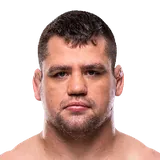
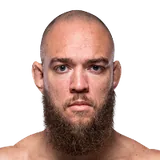
Thomas Petersen is 3-3 through six UFC heavyweight fights, with all three wins on the scorecards, a decision loss to Jamal Pogues and KO/TKO losses to Shamil Gaziev in round one and Vitor Petrino in round three. Valter Walker is 4-1 through five, and his four wins are all first-round submissions, over Junior Tafa, Don'Tale Mayes, Kennedy Nzechukwu and Louie Sutherland. Both men have beaten Mayes, Petersen over 15 minutes and Walker in under one round. The model has Walker at 59.2%.
The read is finishing rate against durability, and the shared opponent is the cleanest comparison available. Walker's path is the only one he has needed in four fights, getting hold of the fight early and ending it on the floor inside a round. Petersen's path is surviving the first five minutes, because once his fights get long he wins them and all three of his UFC victories came on the cards. Worth noting that the model lists KO/TKO as the likeliest method even though every Walker win in this sample was a submission.
- Walker's first-round submission run against Petersen's decision-heavy record
- The Don'Tale Mayes comparison, 15 minutes for one man and under five for the other
- Petersen's path is getting out of round one and dragging it into the third
- Heavyweight three-rounder that either ends early or not at all
- A moderate lean with an early window that decides it

The breakdown
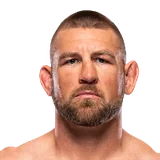
Dustin Jacoby is 10-6-1 across 17 UFC fights and is on three straight KO/TKO wins, over Vitor Petrino and Bruno Lopes and then Julius Walker in February. Before that run he lost to Alonzo Menifield on the cards and to Dominick Reyes in the first round. Muhammad Said, listed as Muhammad Saidov by UFCStats, makes his UFC debut. The model takes Jacoby at 57.7% with the stoppage as the likeliest method.
The gap in octagon experience is as wide as it gets on this card, 17 fights against a debut, and the model still lands under 58%. Jacoby's path is the one he has walked three times running, keeping the fight standing and getting to the finish before the judges are needed. Said's path is unmeasured, and a debut against a light heavyweight with this much cage time is a matchup with little to go on. The size of the number reads as the model discounting Jacoby's record for the years on it rather than doubting the recent form.
- Jacoby's three-fight KO/TKO run against a debutant
- Jacoby has 17 octagon fights of mileage, and mileage cuts both ways
- Said's path is a debut with no UFC bout to weigh
- Light heavyweight three-rounder where the stoppage is expected
- A soft lean given the experience gap, and the number says why

The breakdown
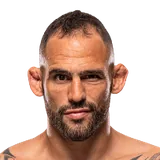
Sam Patterson is 4-2 through six UFC fights and finished four straight before March, two by submission and two by KO/TKO, every one of them in the first round, ahead of a unanimous decision loss to Michael Page. Santiago Ponzinibbio is 12-8 across 20 UFC fights, and his recent run includes KO/TKO wins over Alex Morono and Carlston Harris and KO/TKO losses to Kevin Holland and Daniel Rodriguez, all four in the third round, with a split-decision loss to Muslim Salikhov in between. The model has Patterson HIGH at 74.7%, the strongest number on the card.
HIGH tier on a three-round welterweight bout means the model sees a clean structural mismatch, and the shape of it is early finishes against a veteran whose recent fights all live in the third round. Patterson's path is the one that produced four consecutive first-round stoppages, closing the distance and ending the fight before the third round is ever reached. Ponzinibbio's path runs the other way, because both of his recent wins came in the third and his experience only counts if the fight gets there. The tell is that every result in Ponzinibbio's recent sample landed in round three and every Patterson win landed in round one.
- Patterson's first-round finishing against a veteran whose recent fights all reach the third
- Patterson is coming off his first loss in five while Ponzinibbio has been stopped twice recently
- Ponzinibbio's path is absorbing the opening five minutes and making it a long fight
- Welterweight three-rounder, KO/TKO the expected method
- HIGH tier and the strongest number on the card

The breakdown
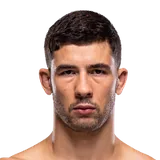
Axel Sola is 1-1 in the UFC, a third-round KO/TKO of Rhys McKee followed by a unanimous decision loss to Mason Jones in March. Ismael Bonfim is 2-3 through five and has lost his last two inside the distance, a doctor's stoppage against Nazim Sadykhov in round one and a KO/TKO to Chris Padilla in round two. The model reads Sola at 63.3% and expects the scorecards.
Trajectory is doing most of the work here. Sola's path is the Mason Jones fight with a better outcome, staying busy for 15 minutes against an opponent who has not seen the judges since May 2024. Bonfim's path is the McKinney fight, where he found the finish in the second round and never had to prove he could be durable. The interesting part is that the model expects a decision from two fighters, three of whose last four outings between them ended early.
- Sola's recent activity against Bonfim's two straight stoppage losses
- Bonfim has not been past the second round in his last two outings
- Bonfim's path is the early finish, the way he took out Terrance McKinney
- Lightweight three-rounder with the decision as the expected method
- A clear lean, though not among the model's firmest on the card

The breakdown
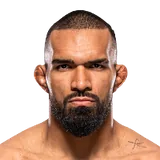
Brendson Ribeiro is 2-5 through seven UFC fights and has lost his last three, all in the first round, by KO/TKO to Azamat Murzakanov, by KO/TKO to Oumar Sy and by submission to Abdul Rakhman Yakhyaev in April. Magomed Tuchalov makes his UFC debut. The model takes Tuchalov at 73.6%, the second-largest number on the card, and expects a KO/TKO.
The size of this read comes largely from what Ribeiro has been doing rather than anything Tuchalov has shown in the UFC, and that is the caveat to carry into it. Tuchalov's path is the one the model expects, applying pressure to an opponent who has lost three straight in the opening round. Ribeiro's path is getting through the first five minutes for the first time since March 2025, and his two UFC wins show he can compete once a fight goes long. A debutant is carrying the second-largest number on the card, and the model got there by reading the man across from him.
- Ribeiro's three straight first-round losses against a debutant
- Tuchalov's number rests on Ribeiro's recent results rather than on any UFC bout of his own
- Ribeiro's path is surviving round one and taking it into the grappling exchanges where he has won before
- Light heavyweight three-rounder, KO/TKO the expected method
- A large number built on thin evidence for the pick, and it deserves scepticism

The breakdown
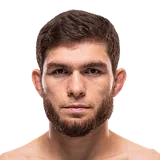
Mike Davis is 5-2 through seven UFC lightweight fights, with a submission win over Natan Levy, a KO/TKO of Mitch Ramirez in July 2025 and decision wins over Mason Jones and Viacheslav Borshchev, against a unanimous decision loss to Fares Ziam. Nurullo Aliev is 3-0 through three, and all three came on the scorecards, over Rafael Alves, Joe Solecki and Shem Rock. The model has Aliev HIGH at 68.0%, with the decision as the likeliest method.
HIGH tier on an unbeaten fighter who has never finished a UFC opponent is an unusual combination, and it says the model is reading the way Aliev wins rather than how emphatically. Aliev's path is the Solecki and Rock fights repeated, controlling position and taking rounds without ever needing to hurt anyone. Davis' path is the finish, because he owns both a submission and a KO/TKO in this sample and neither is anywhere on Aliev's record. The tell is that this is the smaller of the two HIGH picks and three larger numbers elsewhere on the card did not draw the label, so the flag is about the shape of the matchup rather than the size of the gap.
- Aliev's three-decision control record against Davis' mixed finishing threat
- Aliev has never had to win a fight from a bad position in the octagon
- Davis' path is the finish, either the submission he found on Levy or the KO/TKO he found on Ramirez
- Lightweight three-rounder that the model expects to reach the judges
- HIGH tier, though the smaller of the two on this card

The breakdown
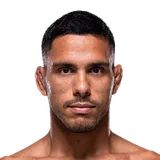
Abdul Hussein makes his UFC debut. Cody Gibson is 3-7 through 10 UFC fights and has lost three of his last five. He took a first-round submission win over Brian Kelleher and a decision over Chad Anheliger, then lost by second-round submission to Da'Mon Blackshear and by first-round KO/TKO to Aoriqileng in October. The model takes Hussein at 70.2% and expects the decision.
A number this size on a debutant is mostly a read on Gibson, whose last two fights ended early against him. Hussein's path is the one the model projects, staying out of trouble and taking the rounds against an opponent who has lost more than he has won in the octagon. Gibson's path is the Kelleher fight, a first-round submission in 3:58. The caveat is that Hussein has no UFC fight to read, so the confidence here should be taken with that in mind.
- A debutant against a veteran with a losing UFC record and two straight stoppage defeats
- Gibson has 10 octagon fights and has lost three of his last five
- Gibson's path is the early submission he found against Kelleher
- Bantamweight three-rounder the model expects to go the distance
- A firm-looking number resting on a read of the opponent, not the pick's own form